
appearance
My Skincare Routine in my 50s
I had occasion to type all this out for a friend, so I thought I’d share it here. It seems a bit deranged, but it’s not that time-consuming, and I think my skin looks pretty good for a 51-year-old who grew up in Redondo Beach and used to go to the beach every day in the summer and intentionally get tan. The only professional service I’ve ever gotten done is two sessions of Sciton BBL (laser) to remove freckling and age spots about 5 years ago.
Wake up:
- Wipe with a Neutrogena Rapid Clear salicyclic acid pad
- Use my Omnilux Men red light mask for 10 minutes, I don’t know how much this really does, but I’d be sitting there reading my emails anyway
- Sunscreen if running outside
After workout:
- Wash with Cetaphil Gentle Skin Cleanser in the shower
- 4% hydroquinone (pulsed, 6 months on, 6 months off) from AllDayChemist
- Cerave AM Facial Moisturizing Lotion SPF 30
- Sunscreen (either Beauty of Joseon Relief Sun or Haru Haru Wonder Black Rice Moisture Airyfit Daily Sunscreen, both Korean formulas from YesStyle – don’t bother with American-ized formulas you can buy here!)
Reapply sunscreen if I go out for a walk at lunchtime!
Arriving home at the end of the day:
- Remove eye makeup with cold cream
- Oil cleanse with Biossance Squalane + Antioxidant Cleansing Oil
- Wash with Cetaphil Gentle Skin Cleanser
- Combination 0.1% tretinoin and 15% Azelaic acid formulation from Dermatica
- 0.03% bimatoprost (generic Latisse) from AllDayChemist
- Cetaphil Redness Relieving Night Moisturizer
- La Roche Posay Cicaplast Gel B5 Skin Protectant around eyes
Before bed:
- Laneige Water Sleeping Mask
- Burt’s Bees Calming Night Cream, OR, if it has been windy and my skin is unusually dry or irritated, Aestura Atobarrier365 Cream
- Vaseline on eyelids and lashes
- I use a silk pillowcase, but I don’t know that it actually does anything
Shopping for Japanese Selvedge Denim in Osaka
I pride myself on being a light packer, and if you ever see me dragging a roller bag behind me, I’m on the way to hell because I’m dead. My husband and I both travel with hiking backpacks, and for a 2-week trip, there’s not really any free space to bring back souvenirs. I also hate shopping, and don’t want to spend time on it while on vacation! That being said, well-made clothing basics are something Adam and I always appreciate, especially if it’s hard or expensive to find them in the U.S.
For that reason, we went shopping for Japanese selvedge denim in Osaka. How is Japanese denim different? For some reason, Japan is VERY INTO JEANS. They became popular as a symbol of modernity after WWII, and there is a group of Japanese designers who have built their business on making jeans the “old” way, with the kind of quality materials most clothing makers no longer use. You can buy jeans from these designers in the U.S., but it will cost you at least $400-$600 a pair. Adam got a pair at Studio d’Artisan, and I got one at Momotaro, each for less than $200 (about what I typically pay for much lower-quality American jeans), thanks to the weak yen and tax-free shopping.
The factors that make these jeans awesome:
- They’re intended to last decades, and the weaving method means they can be repaired (without a patch) if they get a hole.
- They’re woven on old-style shuttle looms, a method that creates a stronger, sturdier fabric that has mostly been abandoned in favor of mass-production projectile loom machines. Slower weaving also puts less stress on the yarn, resulting in a softer feel.
- They’re made with much higher-quality cotton than most jeans. Momotaro uses hand-harvested Zimbabwean cotton, which creates a fabric that’s supple but also very sturdy.
- They’re made from 100% cotton, whereas most modern jeans incorporate some percentage of synthetic fibers.
- They usually feature a dark indigo dye that is intended to fade naturally with a pattern that’s unique to your body.
- They’re finished with french seams rather than a serged edge, which makes the seams more resilient and creates a more finished look.
If you’re in Osaka, it’s worth visiting the stores of the “Osaka Five” (Evisu, Studio d’Artisan, Momotaro, Denime, and Warehouse & Co.) and making room in your luggage for a pair!
I Got Invisalign and I’m Going to Tell You About It
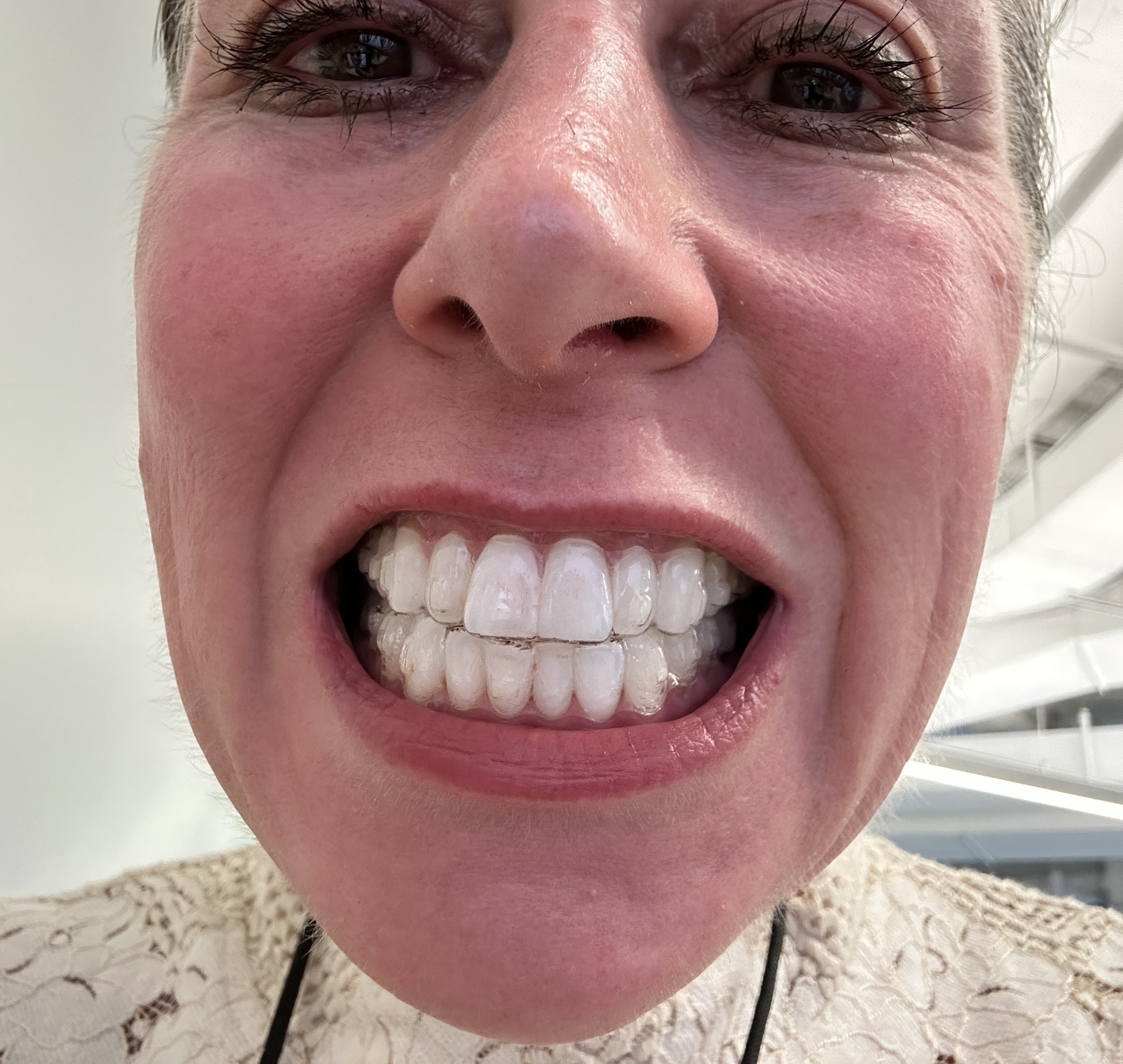
I had braces when I was a kid, but nearly 40 years later, my teeth have moved enough that they’re causing problems, so I started doing Invisalign to get them back into place (and will eventually have a retainer to KEEP them in place). My course will be short — only about 3 months — but people have asked a lot of questions about them, so I figured I’d share my experience.
-
You really do need to wear them 20-22 hours a day. You only take them off to eat.
-
While wearing them, you’re only supposed to drink water. That means no coffee, tea, etc. unless you take them out.
-
EVERY time you put them back in, you’re supposed to brush and floss your teeth. That means, for example, if you go out to dinner with friends, you’re bringing a toothbrush and floss and ducking into the bathroom after you finish eating, like a weirdo.
-
If you remove your aligners, say, for a special event, you will still have the 10-12 clear “nubs” that are glued to the outside of your teeth for the duration of the treatment (these are what allow the aligners to grip the teeth and move them).
-
Lipstick sticks to the aligners much more than to natural teeth. I have gotten into the habit of compulsively running my tongue along the front of my teeth to clean them.
-
Starting a new tray is uncomfortable. It’s the same feeling you used to get when you’d go to the orthodontist to get your braces tightened. Your teeth just ache all day.
-
Hopefully you end up with straighter teeth that last longer than they might have if they were misaligned!
So You've Decided You Want Bangs
If you decide that you want bangs for the first time in probably 30 years, the first thing you should do is go to a professional hairstylist. What you should not do is decide to cut your bangs yourself. Why would you do that? You have a stylist you like. Just make an appointment. No? Okay.
The next step is to look up some video tutorials on the internet. They will generally tell you to use a comb to separate the front of your hair into a wedge shape, and to adjust it smaller or larger depending on how much hair you want for the bangs. Then comb the bangs forward, get them a little damp, and pull the rest of the hair back and out of the way. First, cut the bangs MUCH LONGER than you think they should be, then take off 1/4" at a time until you reach the desired length. What you should not do is to cut them much longer than you think they should be, think to yourself, “That’s way too long!” and chop a couple inches off.
Otherwise, keeping in mind that hair strands get shorter and often curl up a little bit as they dry, you may end up with bangs that are MUCH SHORTER THAN YOU INTENDED.
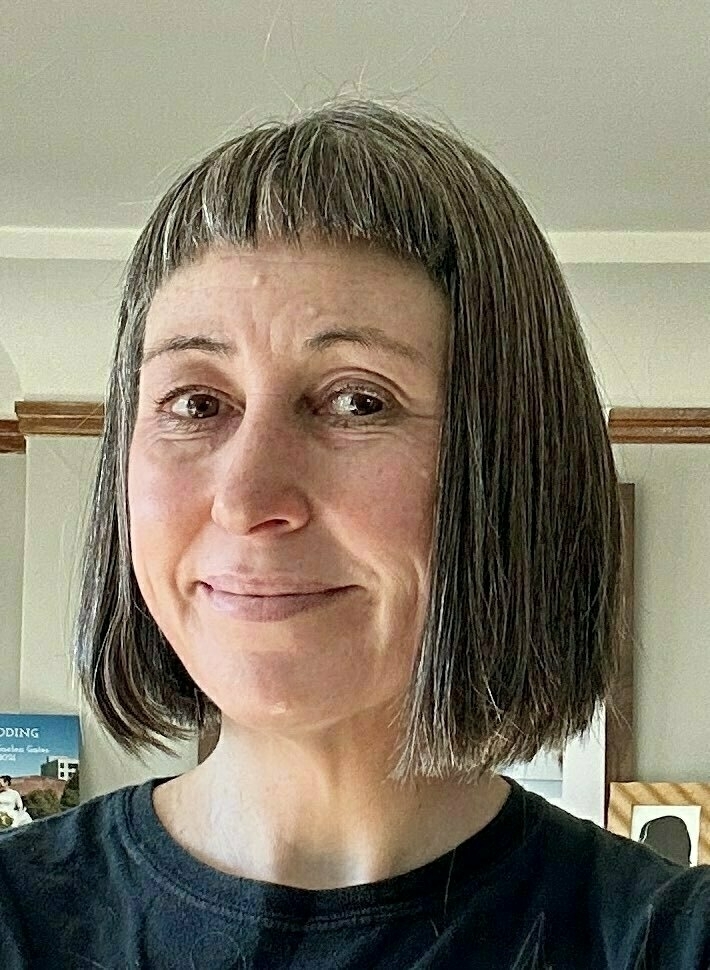
This was a month ago, so the good news is that my hair grows very quickly and I am happier with the length now. Still shorter than I intended. Also, lots of people told me that “microbangs” or “baby bangs” are on trend so I guess there’s that.
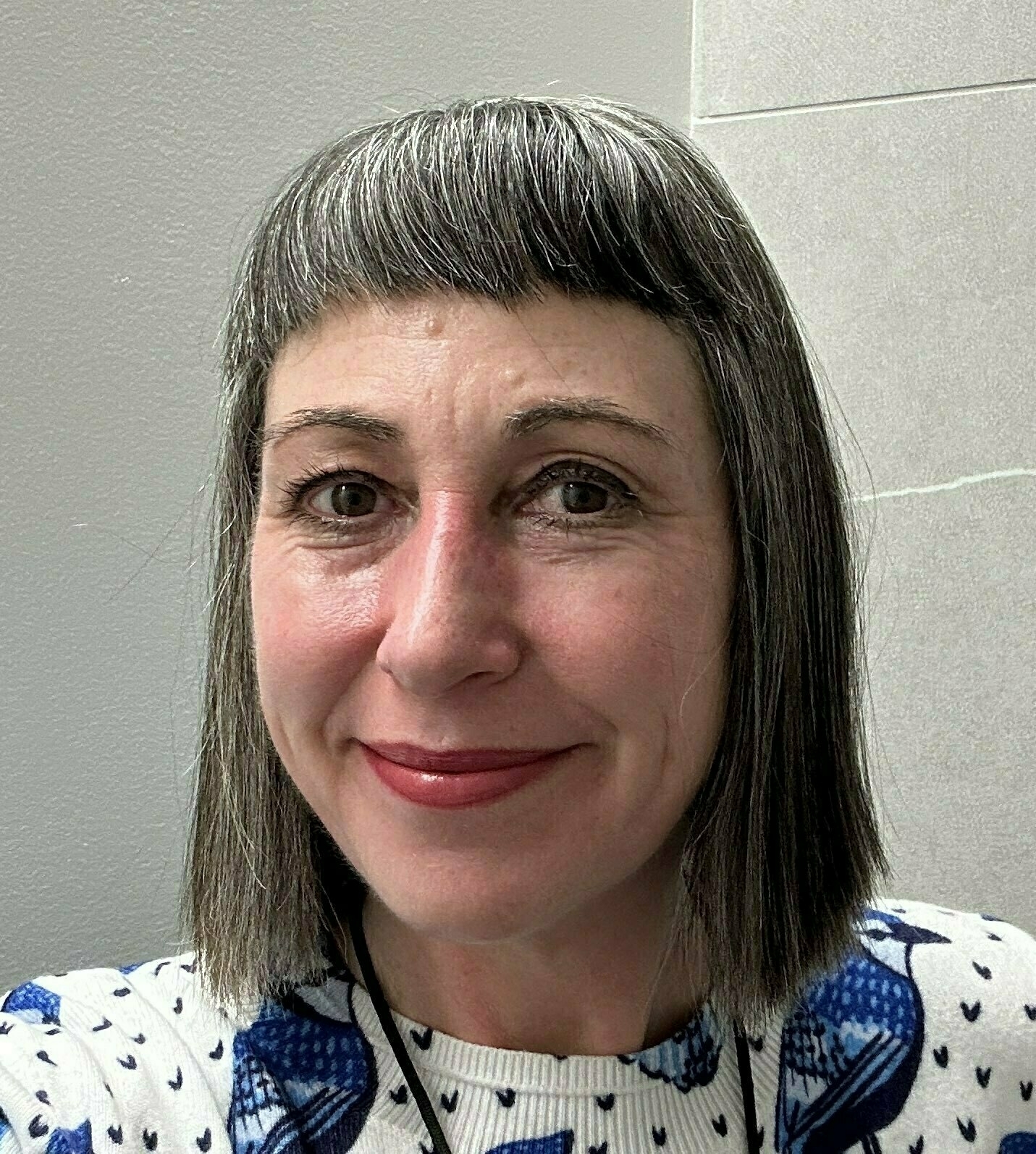
The biggest improvement is realizing how many times a day I was brushing hair out of my face. It’s so nice to have it up and out of the way. And one upside to cutting your bangs way too short is that you get to experience the whole spectrum of lengths as they grow out, and can decide which length is best for you.
Postscript: Looking at these two photos, I guess this is also a post about how great makeup is