2026
How I Stopped Worrying and Learned to Love the Waymos
Prelude
I’d love to not have to own a car. For that to happen, though, public transit would need to be reliable, extensive, and 24/7, and would need to welcome dogs (BART prohibits dogs except small ones that fit in carriers, and Muni only allows 1 dog per person, with extensive limitations). Bike and pedestrian travel would need to be prioritized and safe. We’d need high-speed rail to L.A. to visit my family. For other people to forgo cars, they may need public ebike parking, where apartment-dwellers can securely park and charge their bikes overnight. They may need transit with child safety seats. They may need extra security to feel safe riding a bus home when their 3am hospital shift ends. All that being said, those things do not seem to be in the cards in the near future, so I support anything that enables reduced car traffic and car ownership in San Francisco.
My War on Robot Cars
For some reason, in early 2020, GM’s Cruise vehicles got permission to test their extremely dangerous autonomous vehicles – without human safety drivers! – in my San Francisco neighborhood. Because it was the beginning of the pandemic, I was out running or walking the dogs around my neighborhood 3 or 4 times a day. At first it was amusing to encounter the little robot cars, but that amusement quickly turned to anger when they kept trying to run me over. They would completely ignore me in a crosswalk, or sometimes stop and then inch toward me aggressively, rather than waiting at the stop sign for me to cross.
I quickly came to both resent my neighborhood being used as a playground for these corporate death machines, and to assume that self-driving cars were extremely dangerous and would soon be killing people across the city. I discovered that if you walked up to a Cruise vehicle and pushed down, hard, with both hands, on the hood, you could trick the car into thinking it had hit something and would become disabled. This became a fun hobby (hey, it was the pandemic, activity options were scarce). I loved leaving them, motionless, in the middle of a street. But mostly I just wanted them gone.
Eventually, the state realized how dangerous they were and revoked their license to operate, but not before they actually did kill people.
Enter the Waymo
Having never taken a Waymo, I assumed they were indistinguishable from the Cruise vehicles, and you couldn’t pay me enough to ride in one. However, once ridership was opened to regular San Franciscans, friends started telling me about how safe they felt. At first I dismissed these reports, but the more people I trusted told me about having ridden in one, the curiouser I became.
I think most women have been sexually harassed, or have at least been subjected to creepy behavior, by an Uber or Lyft driver, so that was always on my mind. But then I took an Uber home from my book club where the driver was quite elderly and seemed not to be paying attention to the road at all as he tried to chat up my friend and I, running multiple stop signs. When I finally got out of the car, relieved, I thought, “A Waymo can’t be worse than this. And no creepy driver!” So the next time I needed a ride to pick my ebike up at The New Wheel’s then-extremely-out-of-the-way repair shop, I decided to take one.
I was genuinely shocked at how smooth the ride was. I was reassured by the back seat screen that showed you what the car was “seeing” in real time – i.e. the outline of a pedestrian, cyclist, or other car in relation to the Waymo’s position. The turns were smooth, it stopped at every stop sign, it never tried to run a red light. It gave me the encouragement I needed to take a Waymo again the next time. With each ride, I was more impressed.
The Waymos Proliferate
I wasn’t the only person experiencing this phenomenon. In 2025, it seemed like the number of Waymos on the street grew exponentially. I mostly walk, bike, or take transit everywhere, so I mostly experienced them from the outside, as fellow travellers on the public streets. I started to notice that, unlike most human drivers, they respected my right-of-way as a pedestrian. They never tried to run me over in a crosswalk. They stayed behind my bike in share-the-road situations without following dangerously closely or honking.
What’s more – and this was the real turning point for me – I felt like they reached a critical mass in which they managed to slow down other car traffic. A car stuck behind a Waymo travelling the speed limit can’t speed. A Waymo stopping at a yellow light prevents the car behind it from trying to run the red. Put enough Waymos on the street, and they have the effect of moderating car traffic overall.
Ultimately, I have come to see them as a service that can provide positive effects for the city, even for those who don’t ride in them.
Yes, I Know, Alternatives Would be Better
Of course, I would much rather live in a city that has a robust, efficient, 24/7 transit system that obviates the needs for Waymos entirely. But both BART and Muni are only getting worse, with threats to degrade service even further if certain funding measures don’t pass this November. I understand the argument that when people have the option of taking Waymos, those fare dollars are funneled into Google’s pocket rather than into the transit agencies' coffers (as they would be if people were forced to take transit because Waymo does not exist). That’s a good argument! But I don’t think it’s realistic to try and force people to take terrible, unreliable transit that doesn’t go where they need to get to anyway, in hopes that this will eventually make the transit better.
I DO believe in taxing Waymos heavily in order to pay for better transit, such that people will be persuaded to take transit that has been improved via better funding (and will be dissuaded from taking the more-expensive Waymos). I would also support other measures that channel enthusiasm for Waymos into ways to support SFMTA and BART.
But in the meantime, I no longer think the best solution is to just get rid of the Waymos entirely. And I think they CAN reduce people’s need to own a car, and by serving as moderating agents, can slow down human car traffic. By making car traffic slower, that may have the side benefit of discouraging more people from driving. It’s been a journey, but I have come around to thinking that Waymos or other autonomous vehicles are a starting point for potential improvements to how we get around our city, rather than a blight upon it. And I’d still rather be biking or crossing the street in front of a Waymo than a human driver.
Retiring After 250 Podcast Episodes
Back in 2014, I was thinking a lot about how streaming had taken over the world of music, and no one bought a record and sat and listened to it over and over again the way we did when we were younger. I thought doing a podcast in which Adam and I talked about one new album at a time would be a way to force both of us to really spend time with a new album, in order to come up with interesting things to say about it. It was also something fun and creative that we could do together. It just so happened that there was a community radio station that started up at about the same time we came up with this idea, and they started running our podcast as a show, which forced us to stick to a twice-a-month cadence so that we had a new show recorded in time to run in our time slot. It also kept us to a disciplined 30-minute run time.
I always had new albums to consider, because ferreting out new music has always been one of my big hobbies. I had many friends with whom I’d share recommendations and discuss new artists. Adam and I went to South by Southwest for music every year, and I always had new discoveries I wanted to talk about. We did the podcast because we enjoyed making it together – it was a way to make something creative despite (my) not having any artistic talent! – and I never really expected anyone to listen to it beyond people I knew personally.
Now, 12 years later, most of the friends I used to discuss new music with are either gone, or had kids, or stopped being interested in discovering new artists. South by Southwest got sort of massacred by the pandemic, and although we went back in 2022 and 2023 after it returned, it’s been downsized and moved to be held at the same time as the “tech” portion, which makes it much less desirable for multiple reasons. There were also some fundamental changes to Austin that made it harder and harder to hold in its longtime format.
The end result is that it’s become increasingly tougher for me to find new albums to propose for discussion, and the twice-a-month schedule has become more and more stressful to maintain (I do all the selection and editing work, Adam just shows up to talk). When we got to 200 episodes, we thought about making #200 our last episode, but ultimately decided to continue. Now that we’re on episode #248, we’ve decided to make #250 the last one.
I’ll miss doing it, but it will also be a relief. I feel like I have less time to listen to new music these days, and being forced to spend a big chunk of my listening time focused on one particular record made it hard to explore much else. I’m now a VP leading a legal team, and much of my day is spent in meetings rather than working independently while listening to music. So I suppose the problem I was originally trying to solve – how to force myself to spend a lot of time with one particular album – is a problem I stopped wanting to solve. On the other hand, my listening habits have really been shaped by the podcast, and I’m a more thoughtful and attentive listener than I used to be. I notice things in music I didn’t notice before, and I think I do a better job of connecting new albums to the context in which they’re recorded. Overall, I find I’m able to discuss them in a more thoughtful way. So maybe the problem I was trying to solve became a problem I didn’t actually need to solve anymore.
I’ve also started working on some other creative projects, including an ice cream cookbook, and I want the opportunity to focus my time and energy on something else.
At any rate, Adam and I will always have that archive of 250 episodes living out there in the ether. You can find the whole list here. I prefer people not be able to link my various projects like this back to my real name, so I won’t link to the podcast homepage here, but it’s not hard to find if you want to try and search for it using the list.
250 episodes is a pretty good run! And who knows, maybe we’ll start up some other sort of music discussion podcast down the line, and keep it on our own schedule. I have a hard time shutting up about new artists I like!
Things to do in San Francisco
After living in the Bay Area for 33 years, I’ve entertained a lot of guests, so I thought it would be helpful to make a list of ideas for out-of-towners. I’ll try and update this with new ideas when I get them. A Google Doc with links in it can be found here, the links didn’t copy over when I cut and pasted it.
- San Francisco City Guides do donation-based walking tours all over the city, you can find the schedule here. They are run by a non-profit and the guides are volunteers, they are usually very good.
- Rent a bike and ride over the Golden Gate Bridge to Sausalito, have lunch, take the ferry back (you can bring the bike on the ferry). You can also just take the ferry both ways.
- You can also just take the ferry round trip to any destination, it has really nice views of the bay. It’s public transit so it is relatively cheap.
- Take a one-hour Bay Cruise that goes around the Bay for sightseeing and has better views than the ferry.
- Walk across the Golden Gate Bridge. If you have a car, it’s much easier to drive to the Marin side and park there. Check the website because the parking lots are sometimes closed.
- Visit the Clare-Lilienthal House to see a Victorian mansion preserved with period-appropriate decor. You have to join a guided tour, they only take place on Wednesdays and Saturdays.
- Musee Mechanique has a unique collection of vintage, coin-operated mechanical games.
- Go to the SF Museum of Modern Art, eat lunch in Yerba Buena Gardens if the weather is nice.
- Visit the Legion of Honor for mostly 16th-20th century European paintings and sculpture in a beautiful building.
- The Exploratorium is more kid-oriented and has hands-on science displays that are really interesting.
- I haven’t personally been to the Walt Disney Museum (run by his family) in the Presidio, but I know it’s popular.
- Rent a bike and ride through Golden Gate Park along JFK Promenade from east to west, then south through Sunset Dunes Park. Stop at the Rose Garden and the Bison Paddock along the way.
- There are a lot of beautiful mosaic tile staircases that aren’t necessarily worth seeking out on their own, but check to see if one is nearby a place you are already visiting. If you visit the one in Glen Park, the Burnside mural and stairs, see if you can find the tile with our names on it (for donating to the project!).
- Visit the beautiful plant collection at the Conservatory of Flowers in Golden Gate Park.
- Take the ferry to Alcatraz. Note that the ferry tickets must be booked a few weeks in advance.
- The two best places for views in the city are Twin Peaks and Bernal Hill. Twin Peaks can be a pain to get to if you don’t have a car. Bernal Hill is closer and accessible via multiple bus lines, and you can check out the cute neighborhood of Bernal Heights on Cortland Ave. Stop in the backyard of Wild Side West for a drink in the early evening.
- Riding in a GoCar (little open-air motorized trike) is pretty fun. They do guided tours, or you can go on your own with a GPS-guided route.
- Walk south down Valencia Street in the Mission for shopping and look at the murals in Clarion Alley, turn east and walk down 24th Street, with detours along Balmy and Orange Alleys for more murals. Dolores Park is great for people-watching if the weather is nice.
- Walk along the Land’s End Trail for spectacular views of the Golden Gate Bridge.
- Visit the Cable Car Museum.
- Have lunch at The Ramp in Dogpatch, then walk through Crane Cove and Bayfront Parks. There is some nice shopping walking south along 3rd St.
- Walk up the Filbert Steps to Coit Tower and then check out the WPA murals inside. If you want, watch the documentary “The Wild Parrots of Telegraph Hill,” which is about the origins of our little green parrots and the original home in the area.
- Go roller skating at the Church of 8 Wheels.
- Visit the historic ships at Hyde Street Pier.
- Walk along the Embarcadero and stop at the Ferry Building for lunch.
- Check out the sea lions at Pier 39.
- Visit the California Academy of Sciences, where they have a walk-through butterfly aviary, a planetarium, and a good aquarium. They have 21+ nights 6-10pm every Thursday.
- Combine the Japanese Tea Garden with the SF Botanical Gardens, both are right near the California Academy of Sciences.
- If there is a special exhibit that interests you at the DeYoung Museum, it might be worth visiting, but the permanent collection isn’t that great.
- The Asian Art Museum has one of the largest and most extensive permanent collections of Asian art in the world.
- Walk around the North Beach neighborhood, which is “Little Italy.” The show “Dear San Francisco,” in a theater there, is supposed to be a very entertaining circus-oriented performance, but I’ve never been.
- Presidio Tunnel Tops Park has great views (and you can walk about 15 minutes to Crissy Field Beach, which does too, and you can watch people kite surfing).
- The Wave Organ is a cool acoustic sculpture out on a jetty, it has good views of Alcatraz and downtown.
- If visiting during Easter, the sunrise service at the giant cross on top of Mount Davidson is a popular experience.
- City Kayak does kayak tours of the Bay, which are fun if the weather is nice. They leave from along the Embarcadero near Oracle Park.
OUTSIDE OF SF
- You can do tandem paragliding from Mussel Rock Park (about 10 minutes south of the SF border), usually from around October through March/April.
- Companies do half-day bus trips to Muir Woods National Monument (about an hour north) to see the giant redwoods. Reservations for parking are required (and book up in advance) but walk-ins do not require reservations.
- There are companies that do one-day bus tours to Yosemite, but this is a LONG way (3+ hours by car), maybe desirable for people coming from out of the country.
- Filoli historic mansion and gardens is a beautiful place to visit, down Highway 280.
UNSOLICITED ADVICE
- DO NOT drive. SF is a pain in the neck to drive in, parking is impossible, and your car will get broken into. If you’re in the middle of a road trip, plan to store your car in a secure garage and use public transit to get around.
- Put the Clipper Card app on your phone, it can be used on all transit in the city.
- Avoid hotels west of Taylor St. downtown, and south of Market St. in the 6th-9th St. area. There are some cheaper hotels there, but the area is pretty grungy. Not unsafe, but you will see a lot of homeless people and drug use. For more affordable hotels, stay near the airport (or anywhere to the south within walking distance of a BART station) and take BART into the city. It’s very quick and trains run frequently.
- San Francisco is cold and windy all the time, especially in the summer. Nicest weather is March-early May and Sept.-Oct., but it’s never that warm. It’s always cold at night.
My First Medical Microneedling Treatment
Now that I’m in my 50s, it’s time to step up the nonsense I’m doing to my face!
I use tretinoin, hydroquinone, an Omnilux red light mask, I’ve had 2 Sciton BBL laser sessions to remove dark spots in 2019 (highly recommend!), and of course, I’m religious about sunscreen every day. So I decided to try SkinPen medical microneedling at SkinSpirit in Noe Valley, which is subtle, but provides independently-tested results. Unlike treatments like fillers, it doesn’t provide immediate and dramatic changes, but it also won’t cause your face to look “weird” like fillers do (imho). This is always the tradeoff with cosmetic stuff: the more dramatic the changes, the more potential for it to go dramatically awry.
For those not in the know, medical microneedling is basically getting an ink-less tattoo all over your face and neck. Your skin is jabbed thousands of times with tiny needles to a depth of about 0.5mm, and I had Ariessence, a serum with platelet-derived growth factor, worked into the wounds. The net result is that your skin is stimulated to produce more collagen, improving the look of fine lines and overall texture. Most people get an initial course of 3-4 treatments, each at least a month apart, then continue to get maintenance treatments 2-4 times a year. A subtle effect can be seen within a couple weeks as the collagen begins to grow, with peak (still subtle) effects in 4-6 weeks. It’s also preventative, because we are continually losing collagen as we age. The one place where this treatment really works miracles is with deep acne scars, but I don’t have those. I chose to have it done by a medical professional (RN), but aestheticians are also allowed to performed microneedling to a smaller depth (0.3mm), which is usually cheaper ($700 RN versus $400 aesthetician at SkinSpirit).
The first step is applying a numbing gel, and you sit there for a 25-30 minutes waiting for your face and neck to get numb.
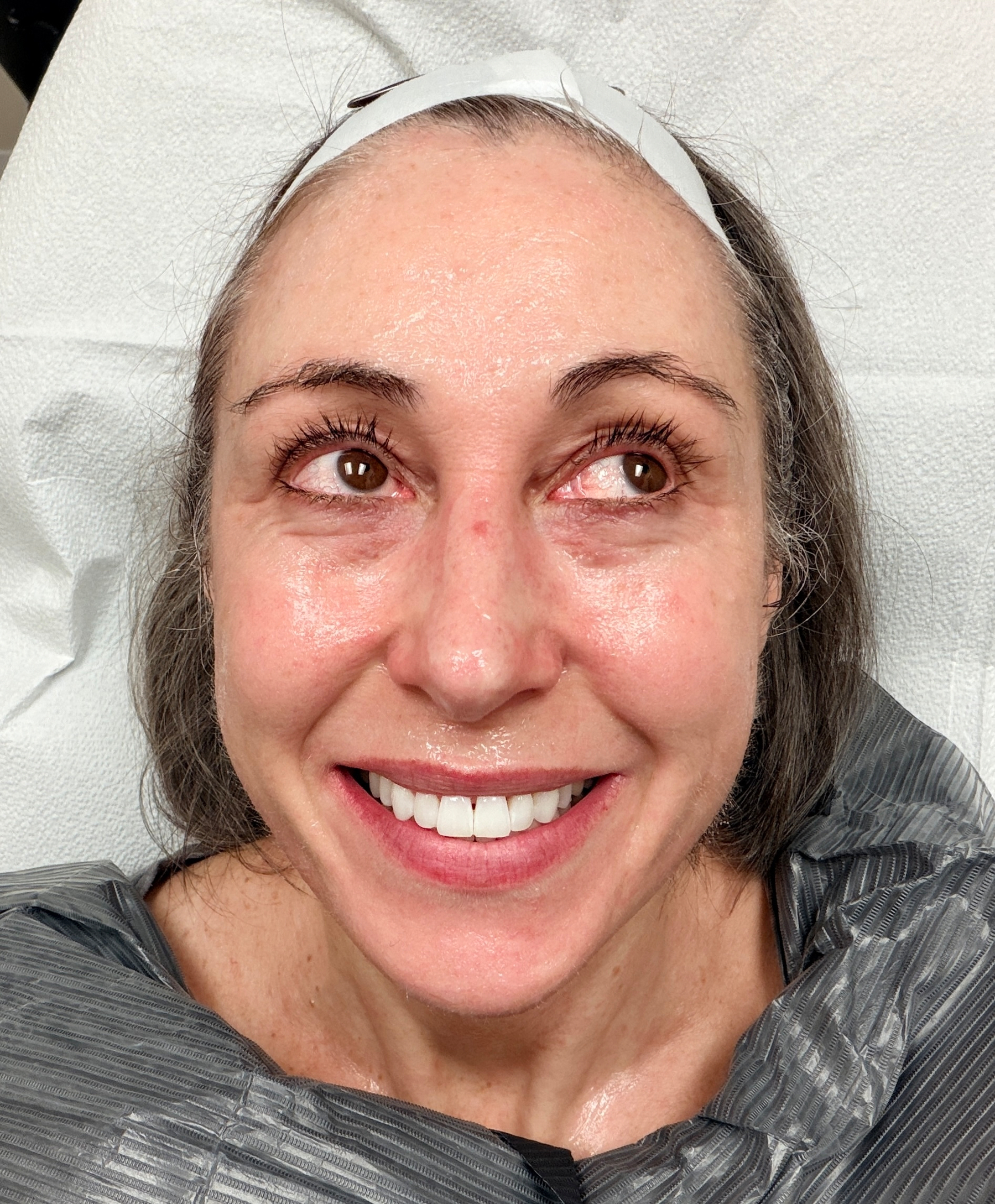
The numbing gel made it completely painless, just a couple slightly uncomfortable spots where the nurse made multiple passes with the device. Immediately after treatment — I was actually less red than I was expecting!
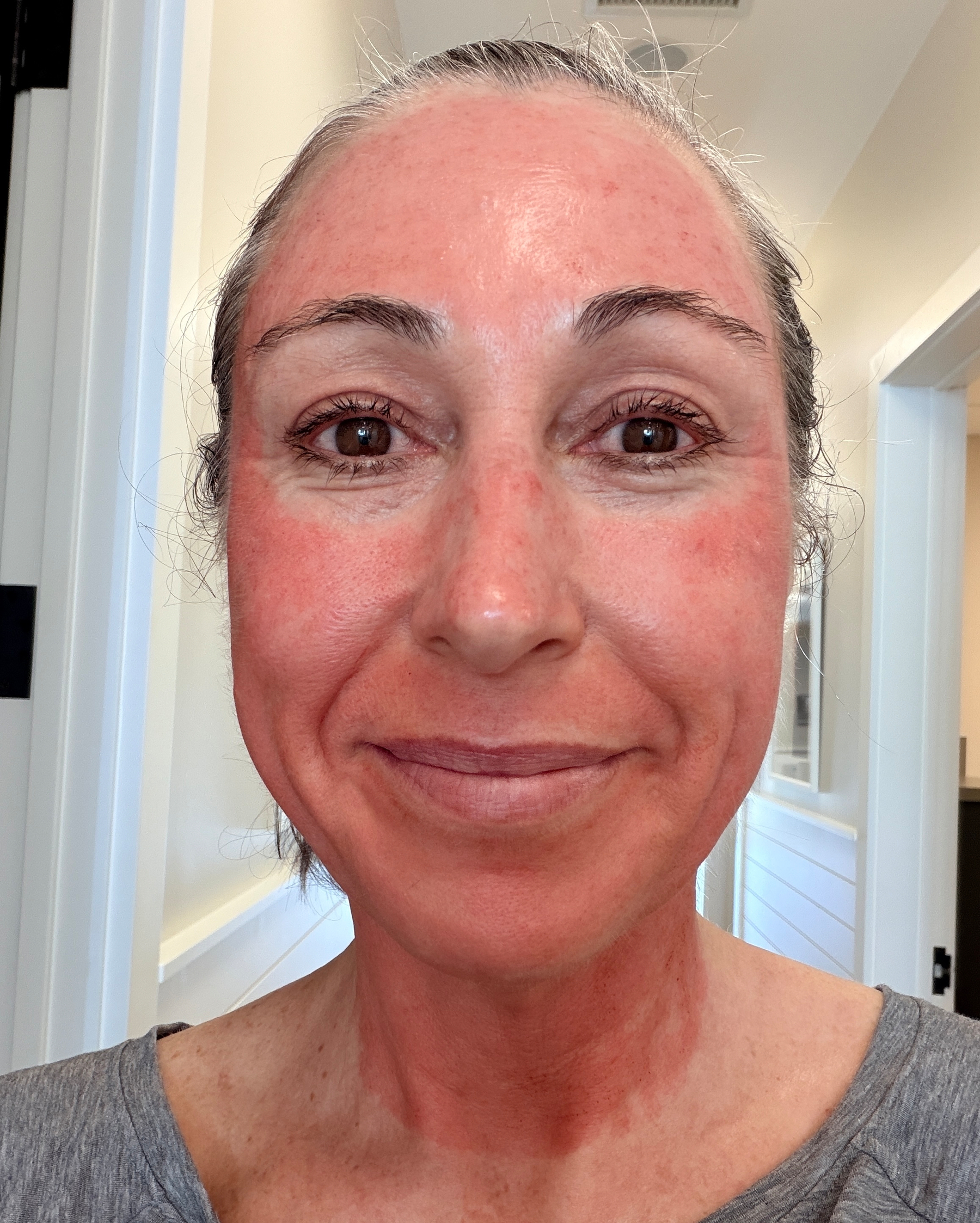
One thing I wish I had thought about was, I rode my bike to the appointment, but had to ride home without my wind-breaking glasses or helmet (because of the chin strap) since I couldn’t have anything touching the skin. Luckily it’s a short ride, but I’ll drive next time.
SkinSpirit sells the CO2Lift Pro Carboxy gel mask as an aftercare upsell, but I found it online for MUCH cheaper, so I applied that as soon as I got home. After 45 minutes it had dried and I peeled it off, and the redness had calmed down quite a bit. My microneedling appointment was at 10:30am, and this was taken around 2pm. If I had to go out and interact with people, I think it would look like I was healing from a sunburn.
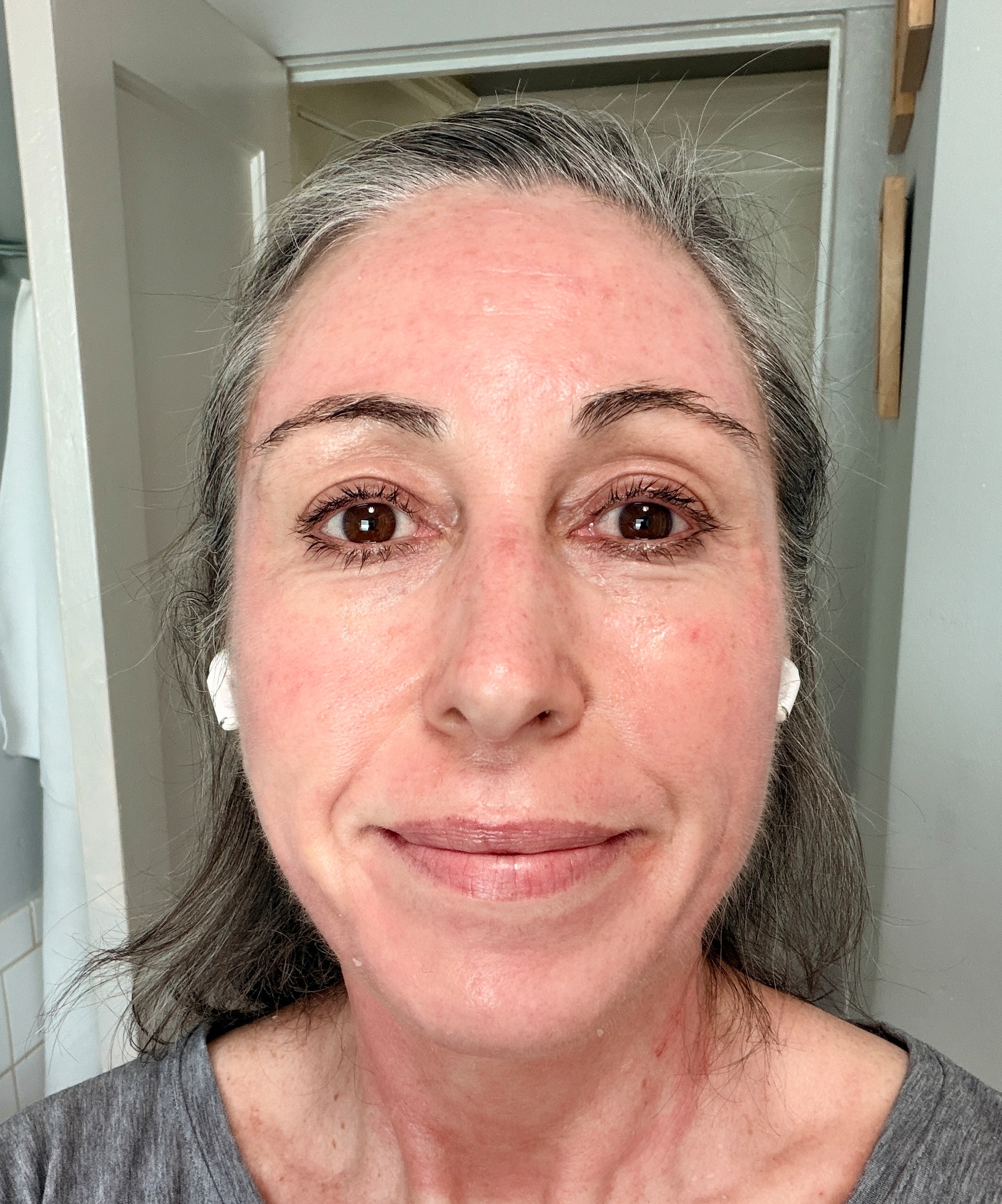
Below is when I woke up the next morning. There was some more patchy redness as the wounds started to heal, but it felt fine. On the second day, you can wear makeup, so I could have covered up the redness a bit, but I didn’t care. I would obviously not recommend doing this right before a big event! You’re supposed to use mineral sunscreen and limit sun exposure as much as possible, which makes it optimal to do this treatment in the winter.
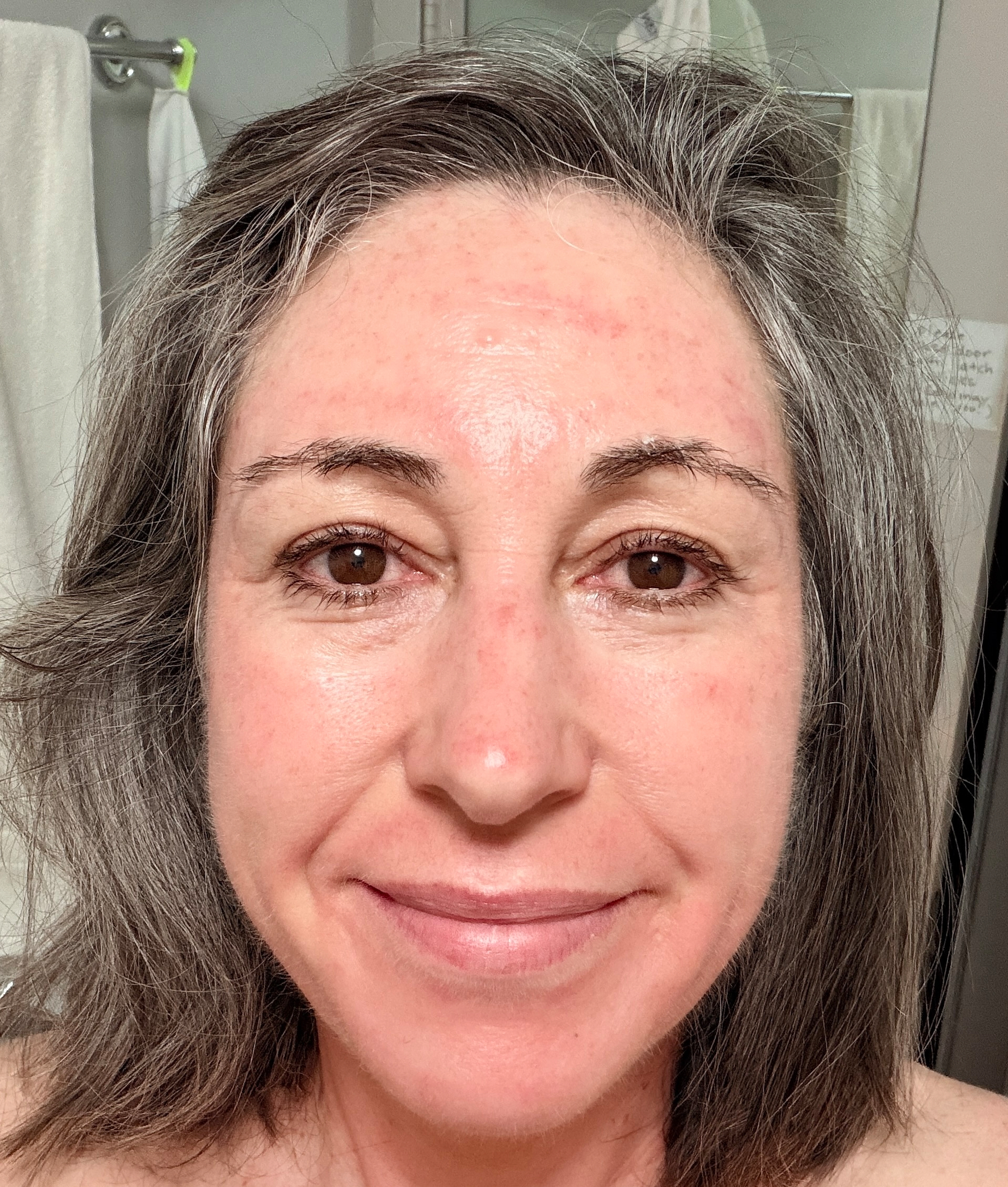
Today is the 2nd day after the treatment, and my skin looks mostly normal — if you zoom in you can see some scabby/irritated patches — but I don’t feel like people will be asking me what happened to my face.
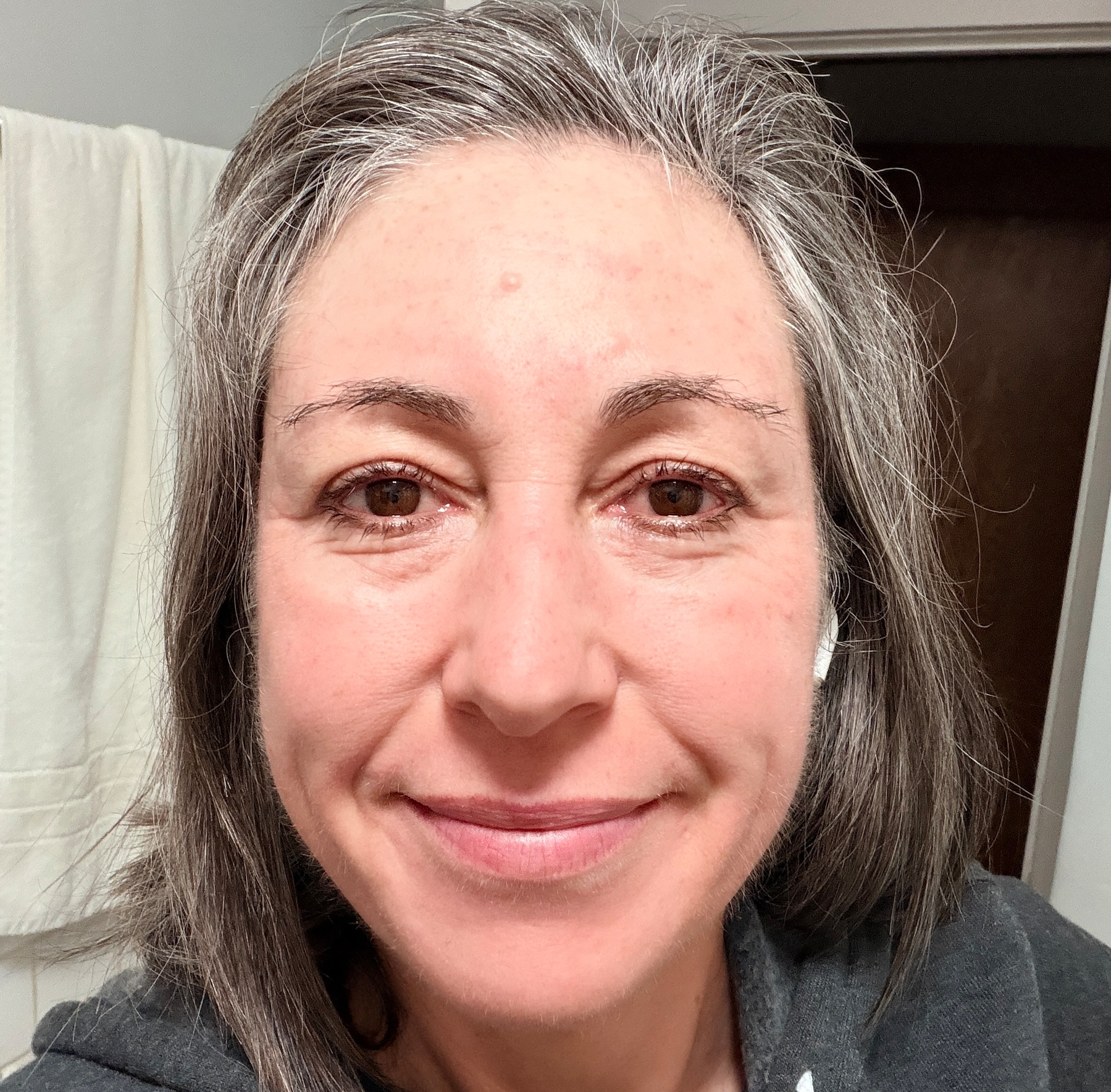
For a few more days, I’ll keep using the small samples of insanely expensive products the nurse gave me, which are intended specifically to aid healing after treatments like this (Alastin Skin Nectar and Sente Dermal Repair Cream). I’ll also be using lots of mineral sunscreen and wearing hats. I’m told there may be some flakiness as the skin continues to heal, and she gave me some Jan Marini Skin Zyme mask to help with that. After a week, things should be 100% back to normal and I can resume using tretinoin and other active products. After I’ve had a couple treatments that have healed, I’ll update with some before and after photos.
The FOG Design+Art Fair at Fort Mason
Yesterday we attended the last day of the FOG Design+Art Fair at Fort Mason, sort of a mini-Art Basel bringing together gallerists from around the world for an incredible sampling of current and emerging artists. I was a bit skeptical of the $40 entrance fee because I’m cheap, but it was well worth it, and we’ll be back next year. A sampling of some of the works that caught my attention are below.
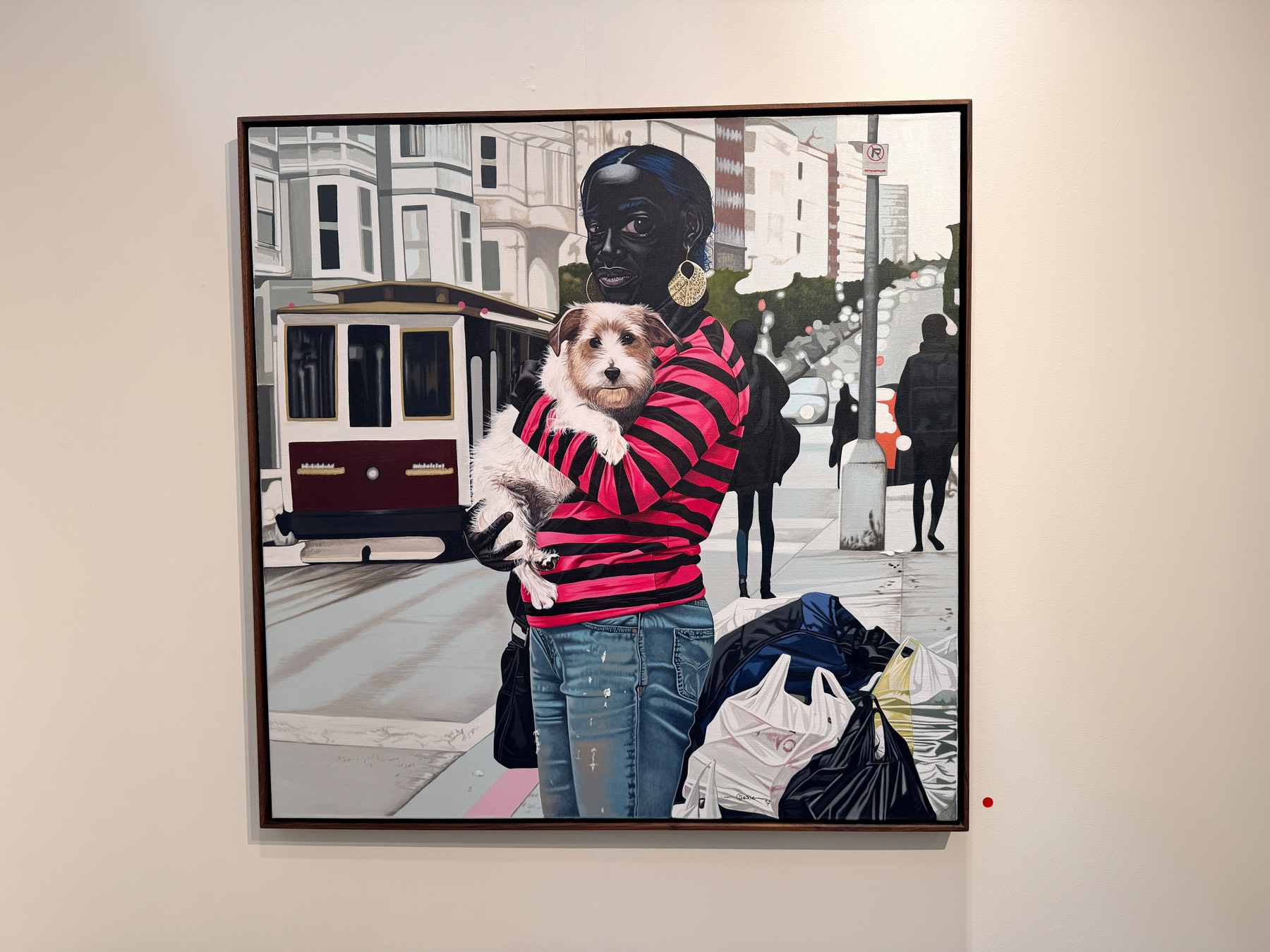
Paintings by Sesse Alangwe:
Fiber works by Sheila Hicks, who currently has an exhibition at the SFMOMA:
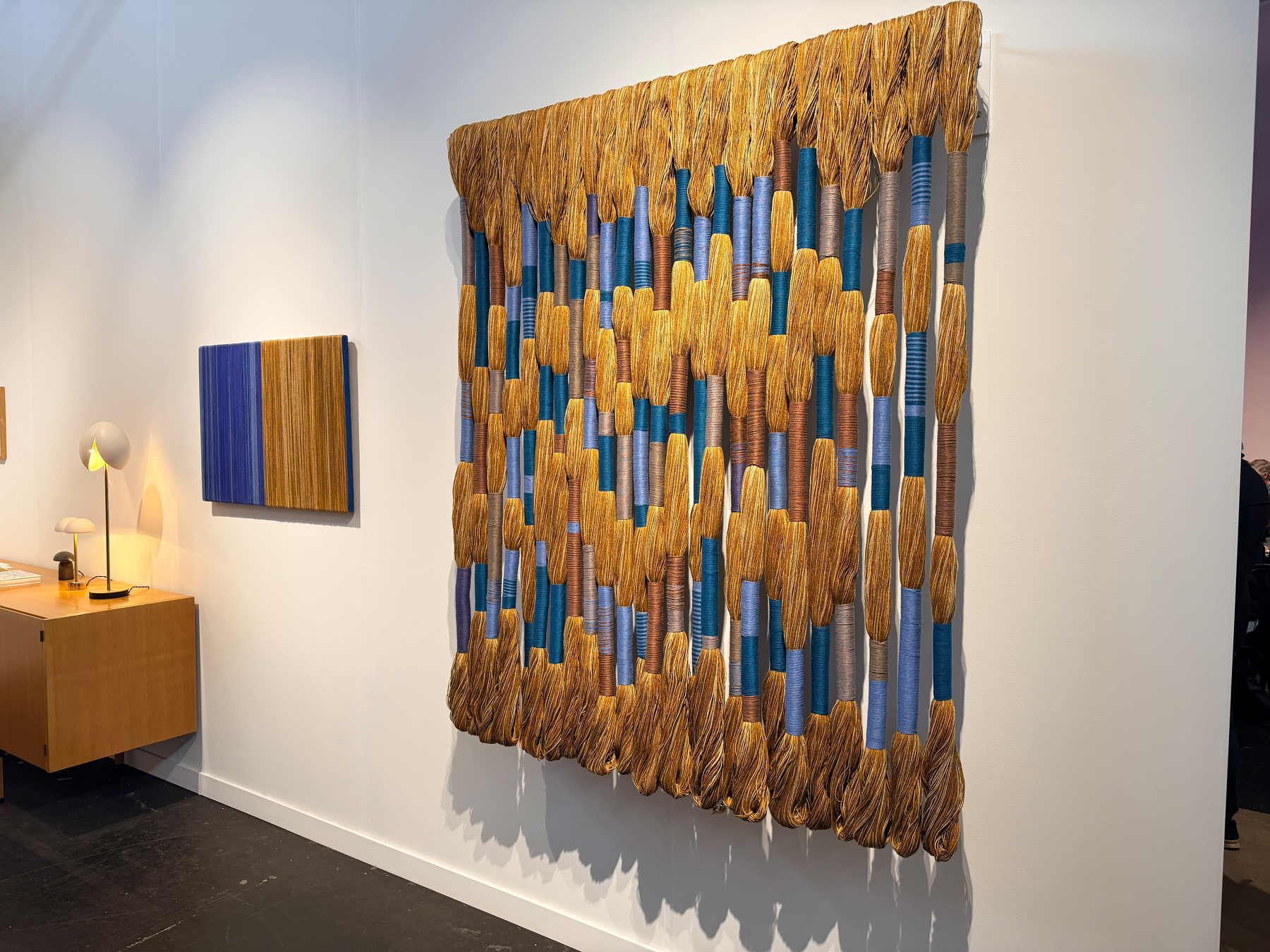
“Woman with Ice Cream Cone” by Kota Ezawa, which is painted on 4 panels to create a 3-dimensional look:
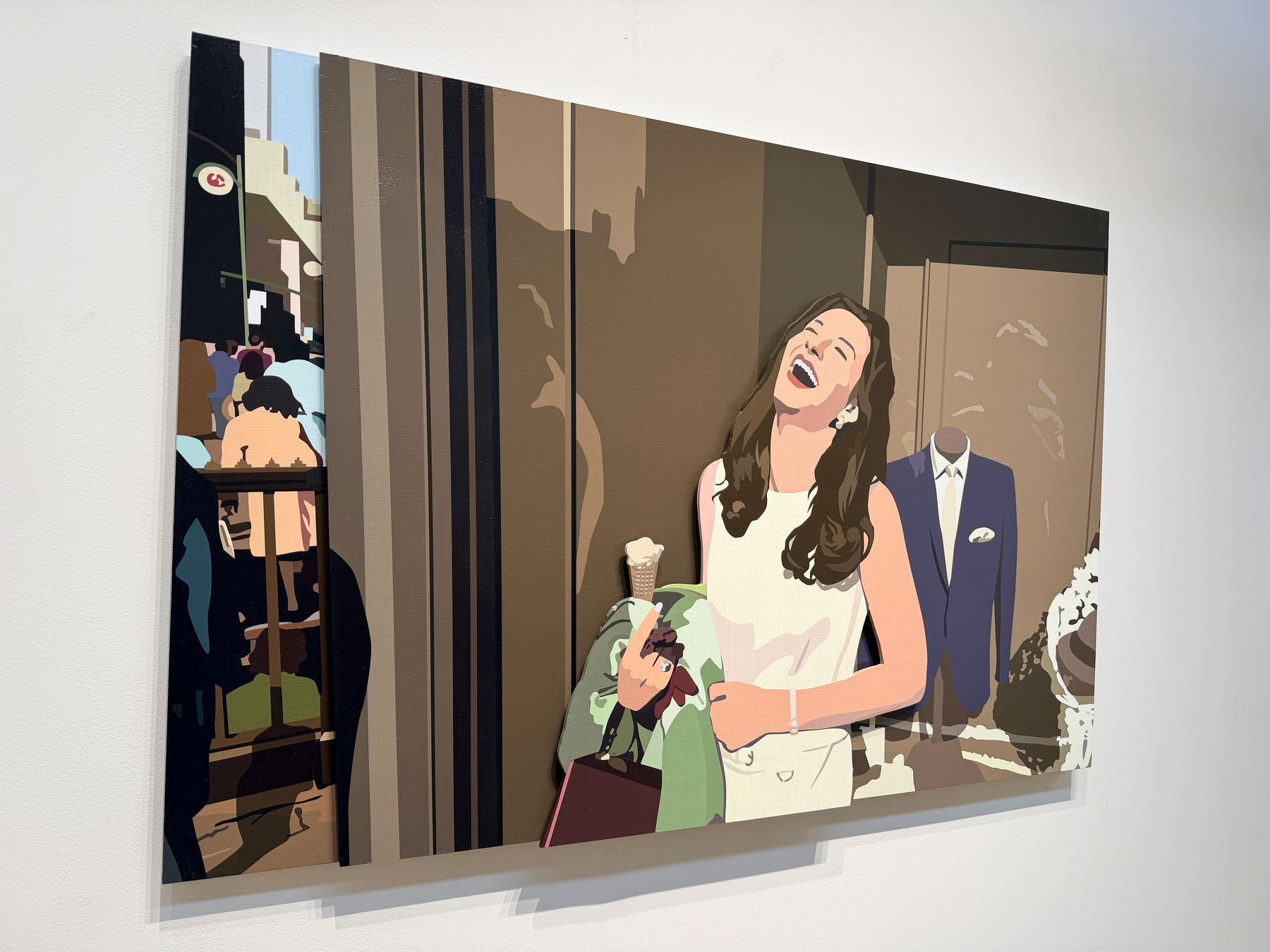
A giant photograph of the ALICE CERN particle accelerator, similar to one that Adam worked on in grad school (here he is posing with the photo):
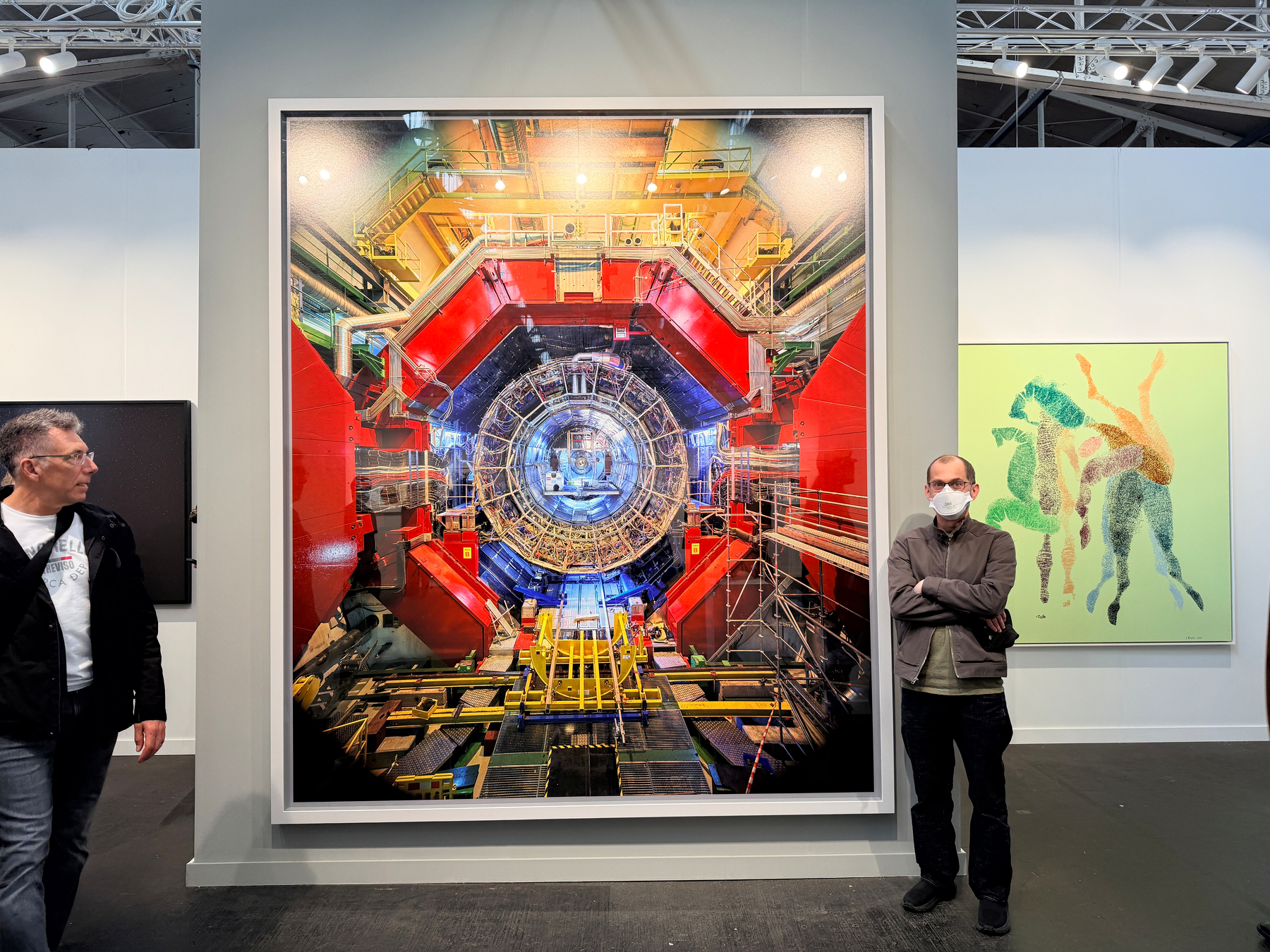
A series of drawings painted over photographs of hands, tiled “Cat’s Cradle #6,” by Asher Liftin:
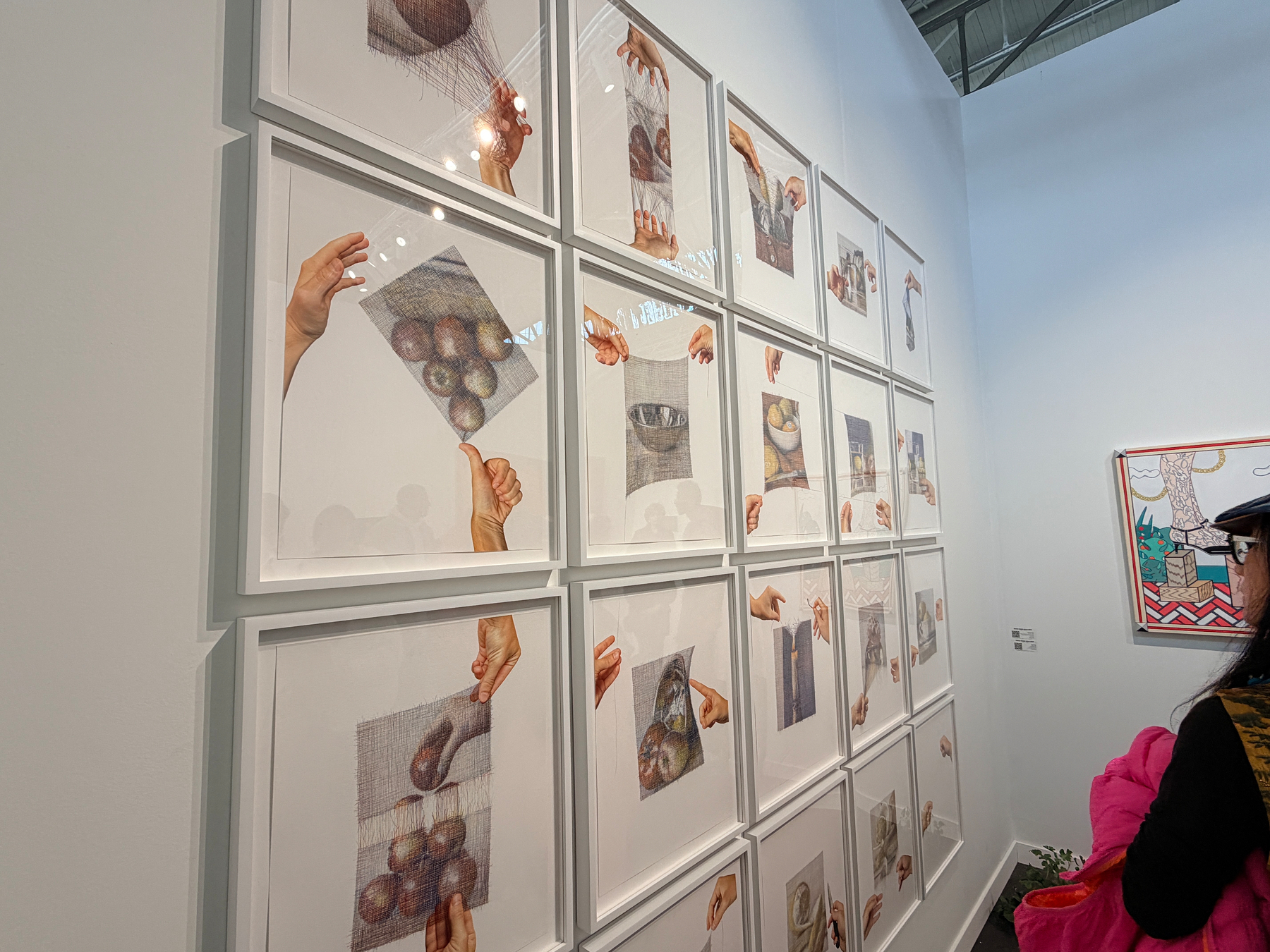
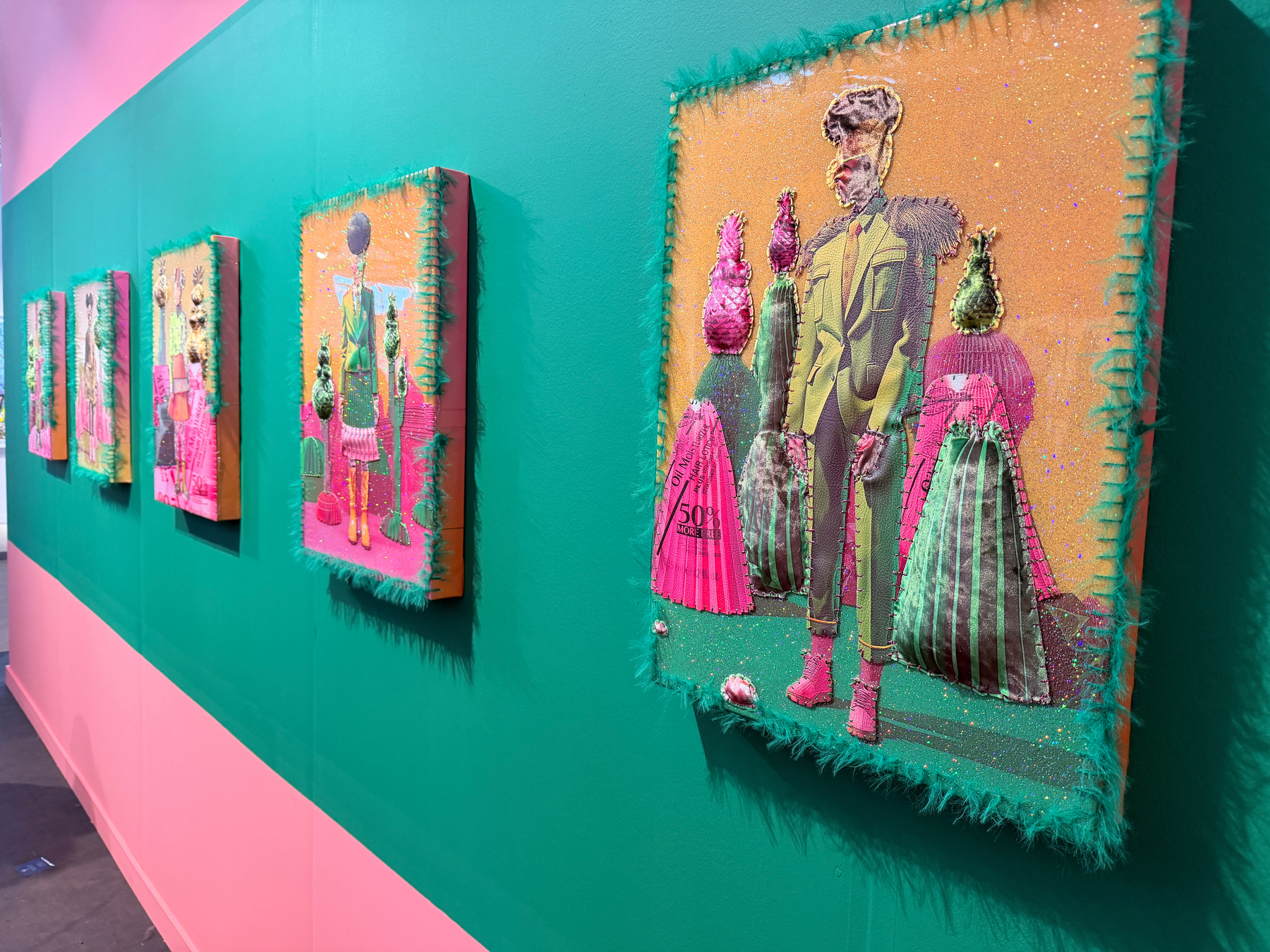
Three-dimensional pieces incorporating leather and velvet, by April Bey:
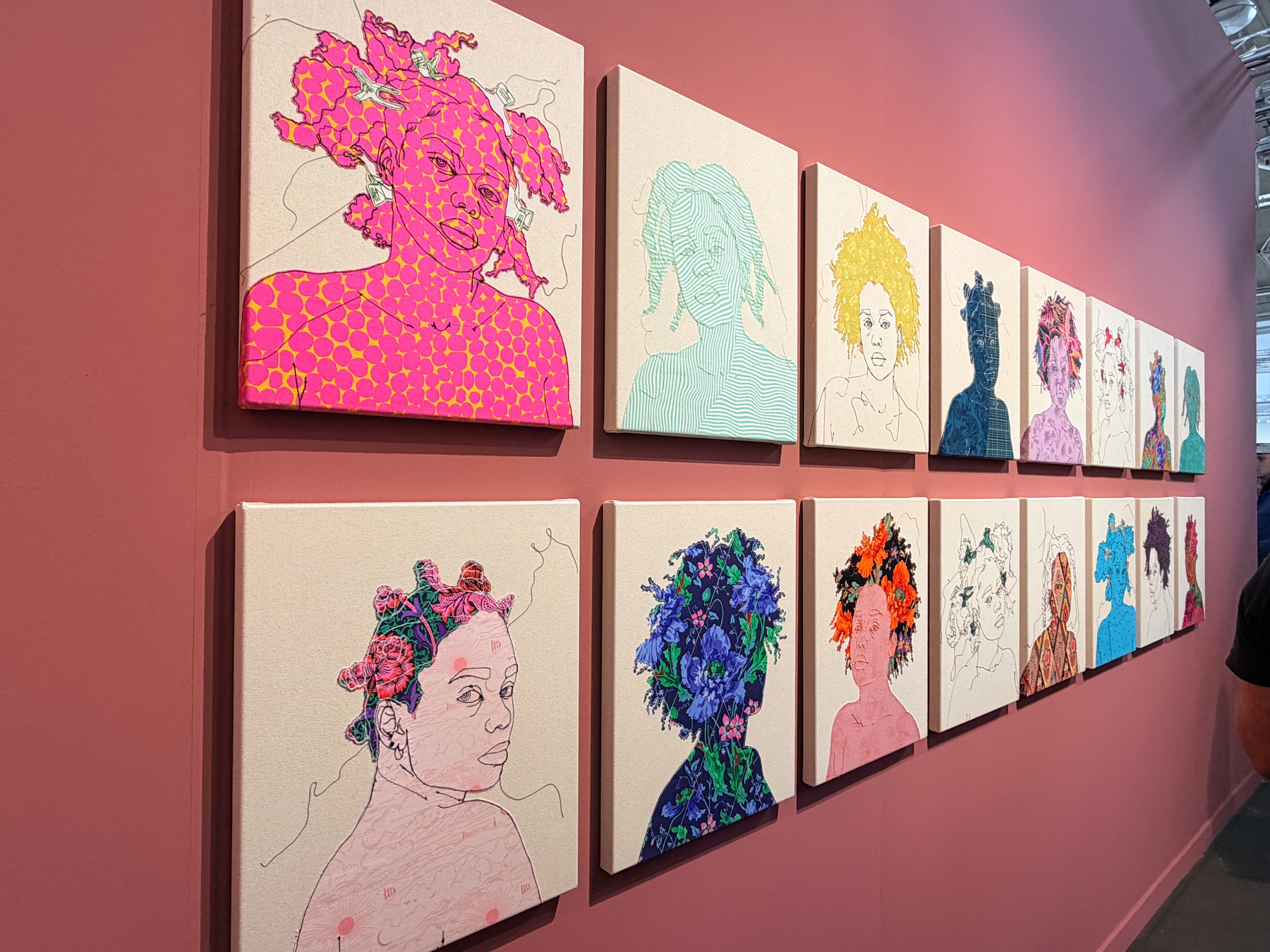
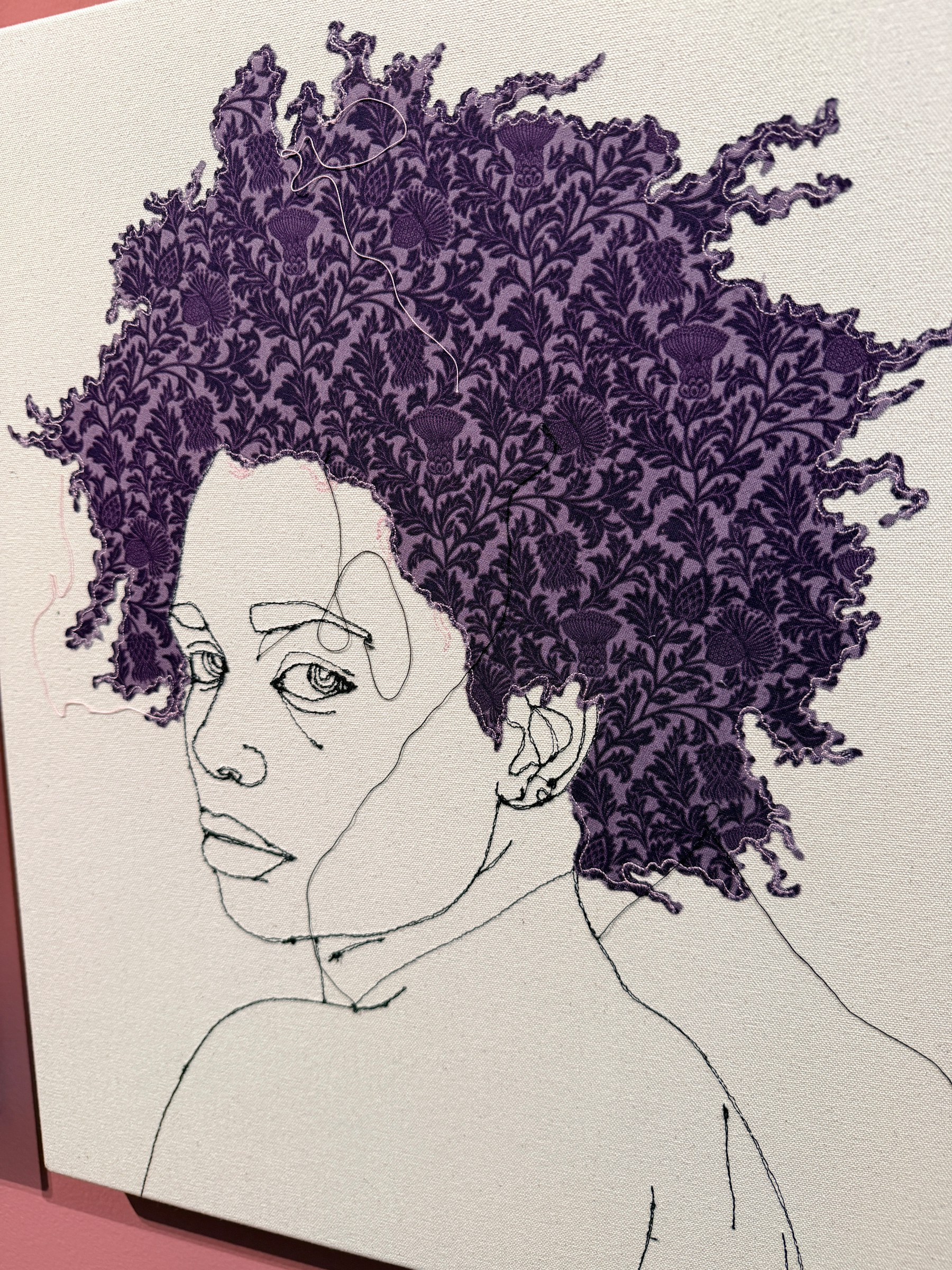
Beautiful portraits made with machine stitching by Gio Swaby:
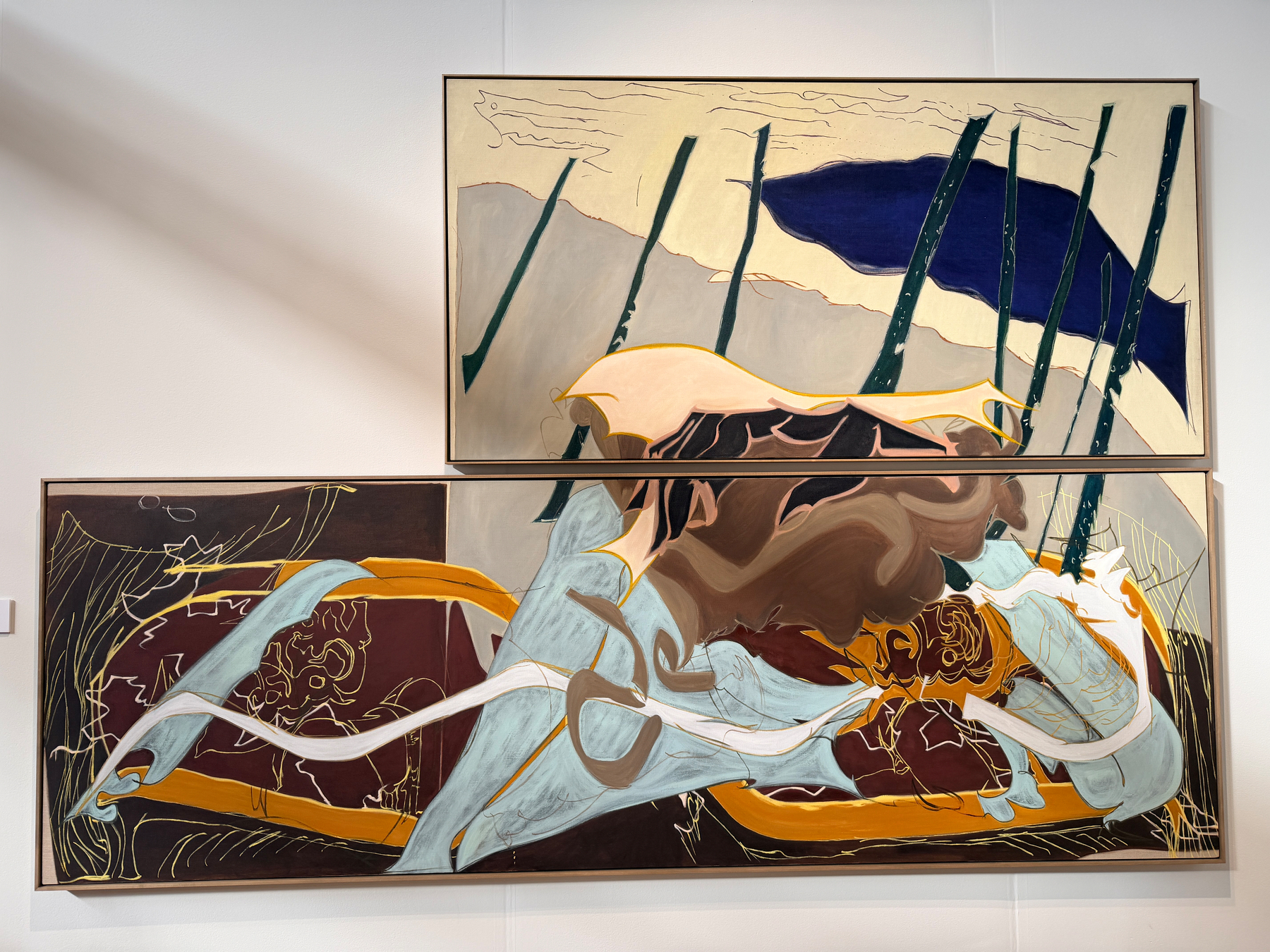
A diptych titled “In the Cut” by Lisa Jo:
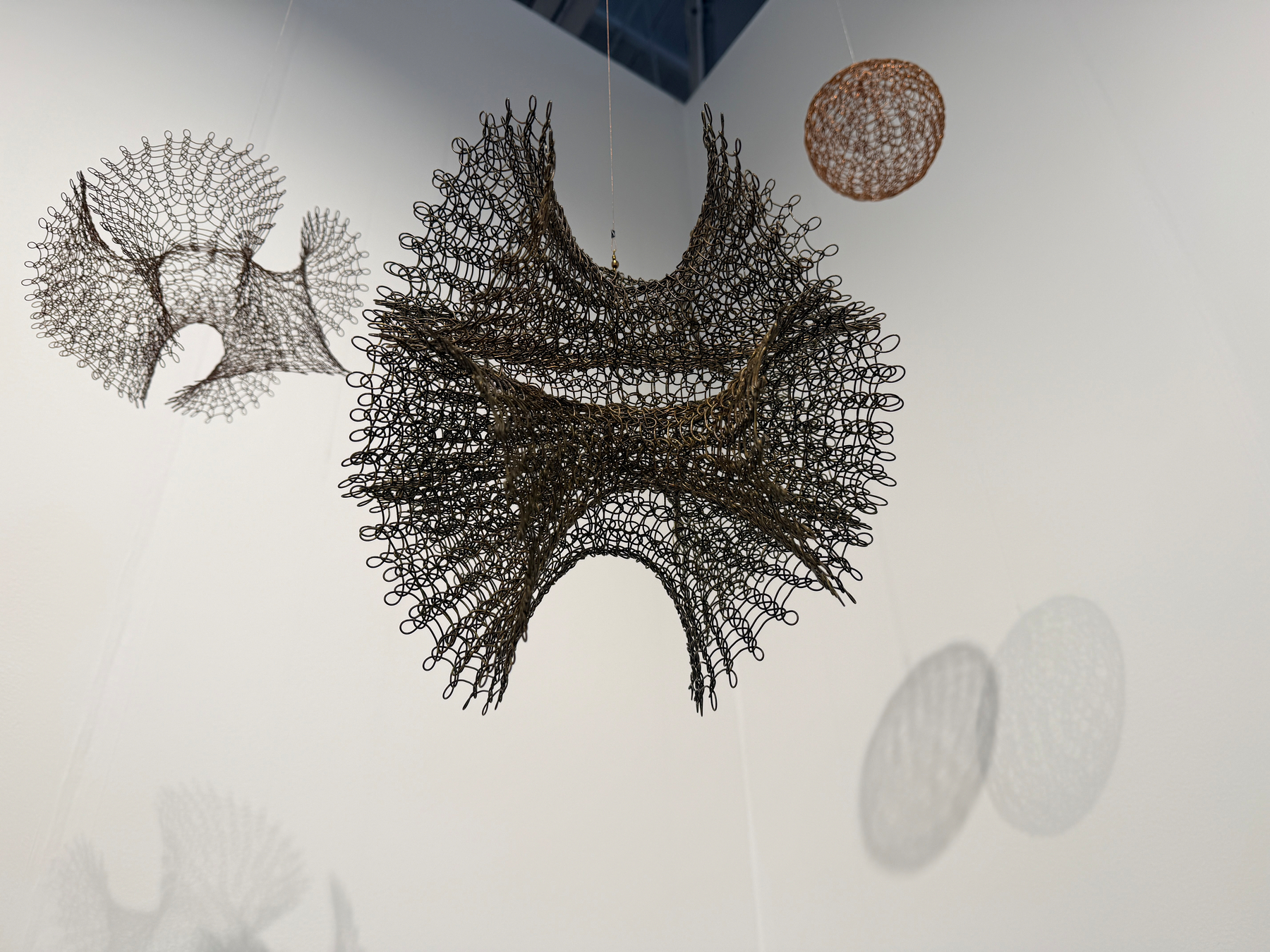
Smaller works by Ruth Asawa:
I've Found the Solution to All My Stress!
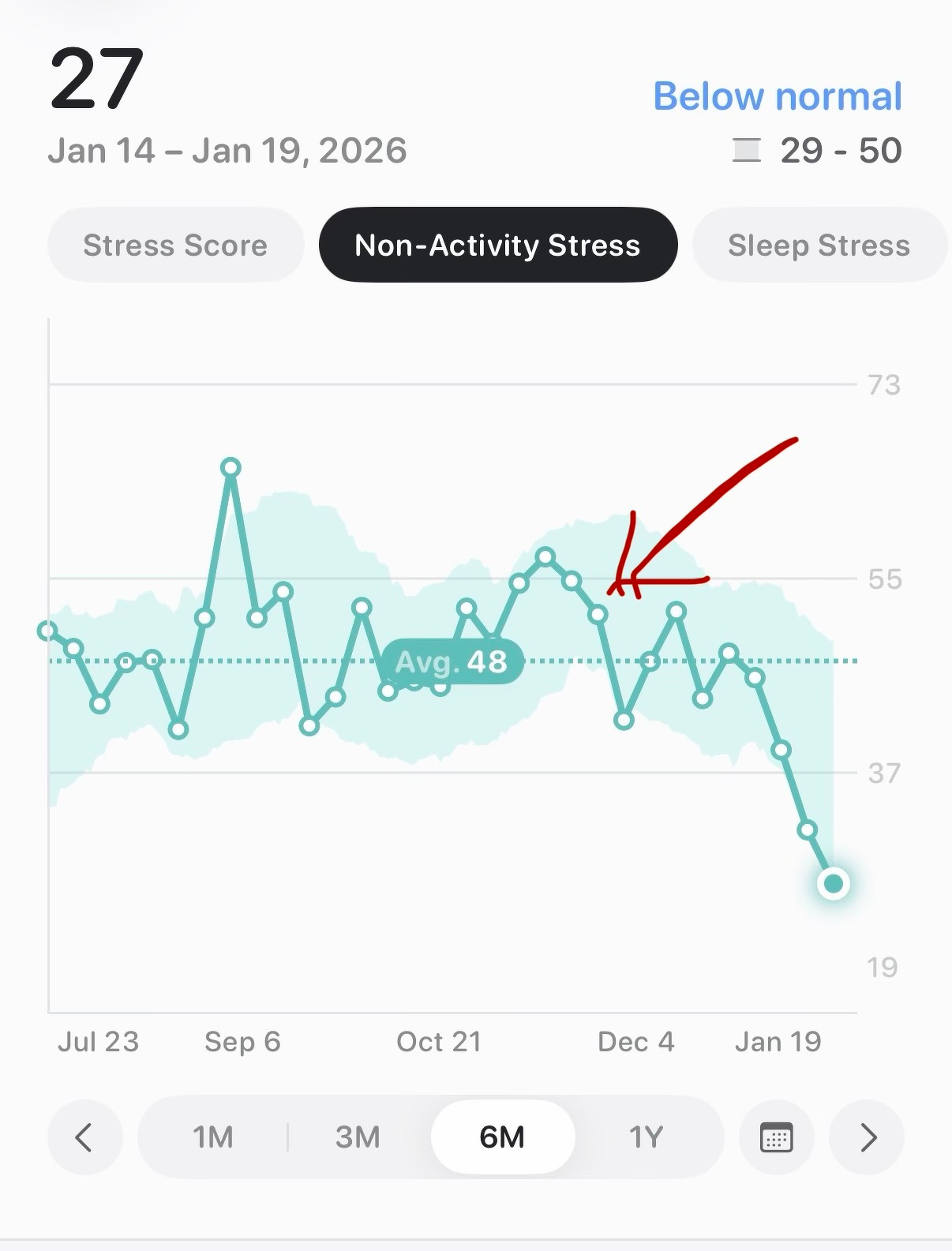
I use Bevel to track things like recovery and health statistics, and I recently looked at my 6-month overall non-exercise stress levels. The arrow is when Adam got laid off, the Monday after Thanksgiving weekend (the subsequent peak is the 10-hour drive to L.A. at Christmas, haha). It confirms my subjective perception that having a non-working spouse significantly reduces stress! Especially given that I am required to be in the office four days a week, having someone to do basic things like walking the dogs, making dinner, and running errands during the day – not to mention larger tasks like project-managing getting our shower re-tiled and re-plumbed – is a huge relief.
I expect that my 50s will be my peak earning years, so being able to dedicate my non-leisure time 100% to work is good for both of us. It underscores the wisdom of California’s marital property laws, which flow from the principle that a non-working spouse contributes just as much to the earnings of a household as a working spouse. Adam is not ready to retire and is actively looking for a new job, but I will enjoy it as much as I can in the meantime!
Knitting Fail: Revolution Watch Cap
My latest project was a beanie for Adam, which was a failure for a couple of different reasons. The pattern was the Revolution Watch Cap by Cecelia Campochiaro, available on Ravelry, and I believe it contained a few errors. Some of them I caught and corrected, but some I didn’t, which is evident because some of the diagonal stripes that should have gone back and forth on the sides just turned into chaos. Secondly, the yarn Adam picked out from Imagiknit, Patagonia Organic Merino by Juniper Moon Farm in Rust, was pretty poor quality. The single skein was made of MULTIPLE pieces, joined by knots, which is something I’d never seen before (occasionally you get ONE knot, but not 5-6). The yarn was also quite weak, and broke if I pulled it too hard. On the upside, it was fun to knit and Adam thinks it feels warm and cozy, which is what matters!

The Dilemma of No-Kill Shelters
I recently saw this headline on what is ultimately a wonderful story about a greyhound who found a home:
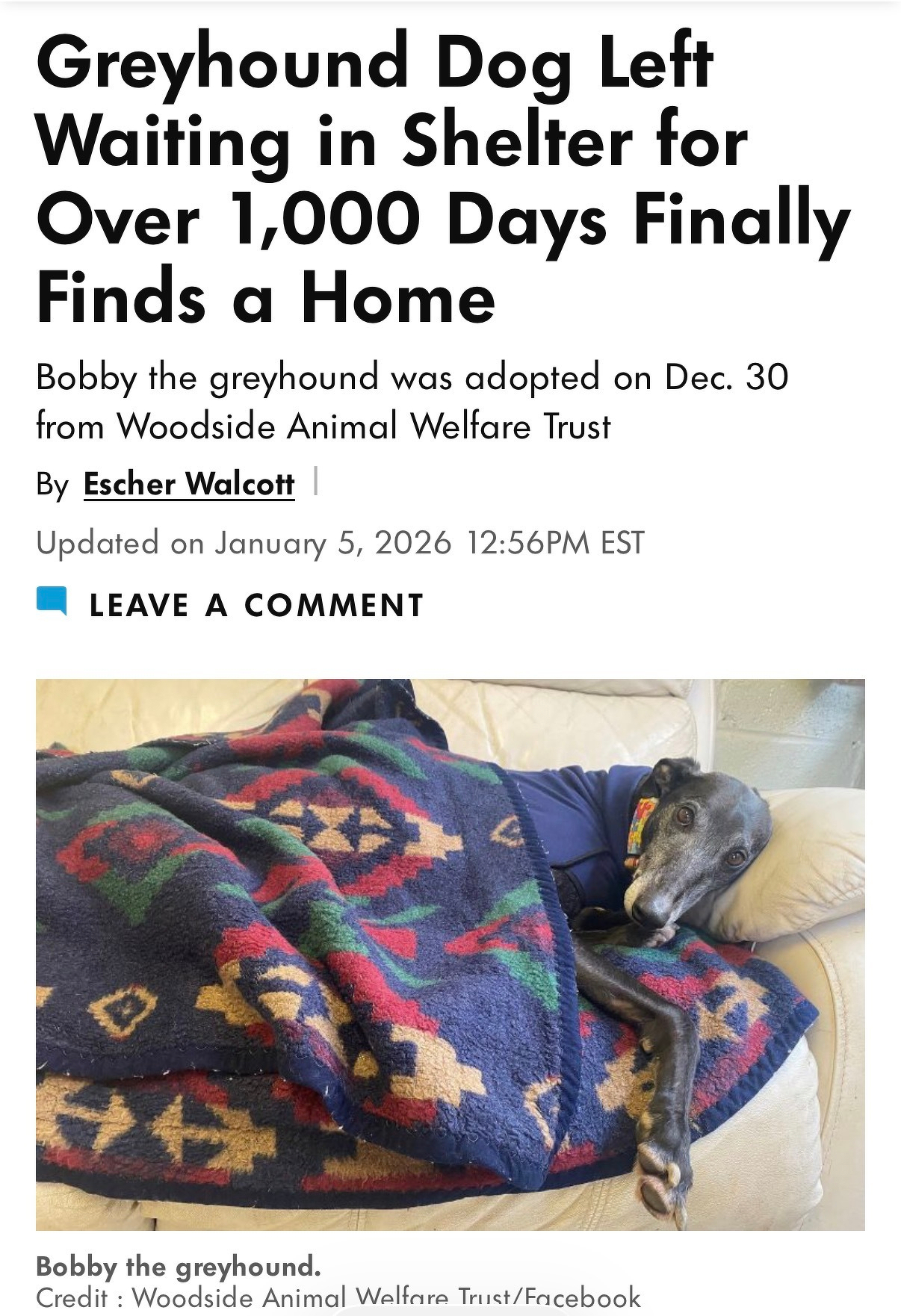 But what struck me is that Bobby waited in a shelter for almost 3 years. THREE YEARS, which is about a quarter of a dog’s life. That’s like 20 years for us.
I’ve volunteered with animal rescue organizations for decades, and I’ve always felt extremely conflicted about the concept of no-kill shelters, because some animals will, for whatever reason, have trouble getting adopted, and a no-kill policy means they may spend a signficant portion of their lives in a shelter. I saw this first-hand when I was volunteering at the Oakland SPCA (now the East Bay SPCA) and was coming back week after week to see some dogs who never seemed to get adopted, and started developing problematic behaviors: Pacing, compulsive licking, barking non-stop, seeming increasingly anxious. I assume they’re the same sort of issues humans develop in prison, especially if they’re in solitary confinement. Some of the dogs seemed to me like they were suffering, no matter how well they were treated by shelter staff and volunteers.
Obviously, environment matters, and some shelters are much more “home-y” with the dogs roaming freely in a shared play area most of the day. Some rescue groups place animals in home foster situations. But a lot of shelters keep dogs in small, concrete enclosures, often alone. Sure, they get a little bit of exercise and attention from staff and volunteers, but nowhere near what a dog deserves. Dogs are social animals, they want to share their lives with other beings (whether human or dog, or both, depends on the dog). If they’re kept in a shelter like that for years, is that a better outcome than putting them to sleep?
I’m not religious, and I approach animals' lives pragmatically: I don’t think a life of suffering is better than not being alive at all. If a tough life, like that of a street dog in Mexico, still includes many moments of joy and “regular” dog behavior, I think that’s probably a life worth living. But what about a life lived in a shelter for many years? Unfortunately, we can’t ask those dogs, which makes it that much harder.
And how to account for the fact that some of these dogs will end up like Bobby, in a shelter for a long time, but ultimately finding a safe and loving home? Does that make up for the years of imprisonment? In my mind, I think it does. But many of these dogs won’t get a happy ending, and we can’t know what will happen in advance.
I don’t have an answer here. I obviously think we should fund shelters so that they’re a positive environment for all the animals who need them, plus special initiatives to put the spotlight on dogs who have spent a long time waiting for adoption, but unfortunately, society doesn’t agree with me. I guess my motivation for posting this is because so many people view a “no-kill” shelter as an unmitigated positive, an ideal to which all shelters should aspire, and I wanted to point out that I don’t necessarily think that’s the case.
But I’m so happy for Bobby. He got the happy ending all dogs deserve.